







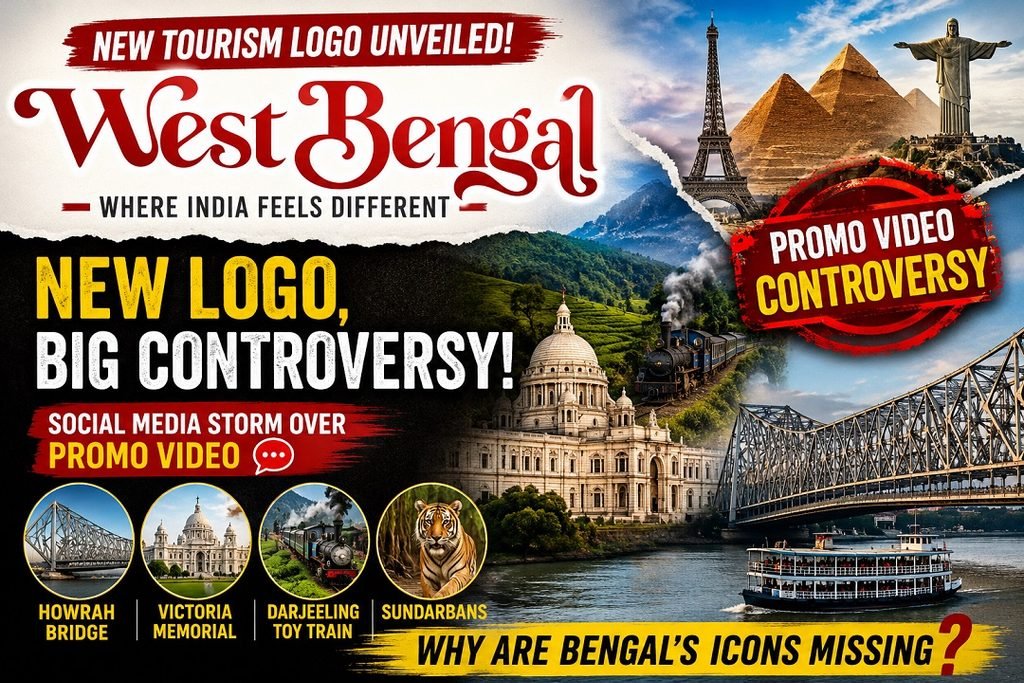
West Bengal has unveiled a new tourism identity designed to present the state to domestic and international travelers as a destination defined by its distinctive heritage, culture, landscapes and traditions.
The state’s tourism department has replaced the colorful “Experience Bengal” branding with a new red-script logo accompanied by the tagline “Where India feels different.”
The new campaign is intended to create a more refined and internationally appealing image of West Bengal while highlighting its diverse tourism potential—from Kolkata’s colonial heritage and cultural landmarks to the Himalayan hills, Sundarbans, beaches and the Ganges.
New West Bengal Tourism Logo Focuses on Heritage and Culture
The new visual identity moves away from the earlier colorful “Experience Bengal” branding toward a more elegant red-script design.
The government says the new identity is aimed at presenting West Bengal as a destination with a character distinct from other parts of India.
The tagline, “Where India feels different,” attempts to capture the state’s combination of Bengali culture, literature, art, architecture, food, festivals and natural landscapes.
West Bengal offers a particularly diverse tourism portfolio. Visitors can experience the cultural atmosphere of Kolkata, the Himalayan landscapes around Darjeeling, the forests and wildlife of the Sundarbans, beaches along the Bay of Bengal and historic destinations across the state.
₹500 Crore Tourism Investment Announced
The branding exercise was accompanied by plans involving approximately ₹500 crore in tourism-related investments, covering several major destinations and tourism projects.
The proposed initiatives include development and modernization across multiple tourism segments.
Ganges Cruises
Cruise tourism along the Ganges is among the areas receiving attention.
The river has enormous historical and cultural importance for West Bengal, and expanding cruise infrastructure could help create a new premium tourism experience connecting important destinations along the river.
Sundarbans Development
The government is also focusing on improving tourism infrastructure in the Sundarbans, one of India’s most distinctive ecological destinations.
Known for its mangrove forests and Royal Bengal Tigers, the Sundarbans has significant potential for sustainable ecotourism.
Improved infrastructure, visitor facilities and connectivity could make the destination more accessible while supporting conservation-oriented tourism.
Darjeeling Modernization
The Himalayan town of Darjeeling remains one of West Bengal’s most recognizable tourism destinations.
The proposed modernization initiatives are intended to improve visitor infrastructure while preserving the area’s distinctive heritage and mountain character.
Darjeeling’s famous toy train, tea gardens and Himalayan views remain among the state’s strongest tourism assets.
Mandarmani Beach Development
The government has also identified Mandarmani for tourism development.
The coastal destination has become increasingly popular with travelers from Kolkata and other parts of eastern India.
Infrastructure improvements could strengthen Mandarmani’s position as a major beach tourism destination while addressing the challenges associated with rapid tourism growth.
Social Media Reaction Divided
The new tourism campaign has generated mixed reactions online.
Supporters have welcomed the attempt to give West Bengal a more sophisticated tourism identity and promote the state to international audiences.
Critics, however, have focused on the promotional video associated with the campaign.
According to criticism circulating online, portions of the video reportedly featured famous international landmarks such as Christ the Redeemer in Rio de Janeiro, the Egyptian pyramids and the Eiffel Tower, while giving comparatively limited prominence to iconic West Bengal attractions.
That has led some social-media users to question whether the promotional material adequately represents the state it is intended to promote.
Why the Promo Video Became Controversial
Tourism advertising generally relies on visual storytelling to establish a strong sense of place.
For West Bengal, critics argue that there is no shortage of distinctive imagery that could have been used.
The state has globally recognizable and culturally significant attractions including:
- Howrah Bridge
- Victoria Memorial
- Darjeeling Himalayan Railway
- Darjeeling tea gardens
- Sundarbans
- Kolkata’s historic neighborhoods
- Ganges ghats
- Bishnupur’s terracotta temples
- Murshidabad’s historic architecture
- Digha and Mandarmani beaches
- Kalimpong and the eastern Himalayan landscape
- Bengali festivals and cultural traditions
Critics have therefore questioned why international landmarks allegedly appeared so prominently in a campaign intended to sell West Bengal as a unique destination.
“Where India Feels Different”
The new tagline itself has become an important part of the discussion.
“Where India feels different” is designed to communicate West Bengal’s distinctive cultural identity.
That identity extends well beyond conventional sightseeing.
West Bengal is closely associated with Bengali literature, music, cinema, theatre, cuisine, art and intellectual traditions. Kolkata, in particular, has long been regarded as one of India’s major cultural centers.
The state also offers significant geographical diversity.
A traveler can move from the Himalayan foothills to the Gangetic plains and eventually reach mangrove forests and beaches along the Bay of Bengal—all within the same state.
This geographical and cultural variety provides the foundation for the government’s new tourism positioning.
Bengal’s Unique Tourism Experiences
One of the strongest arguments for the new campaign is that West Bengal does not need to rely on generic international imagery.
Its own attractions offer distinctive experiences.
Howrah Bridge
The iconic bridge across the Hooghly River is one of Kolkata’s most recognisable landmarks.
Its massive steel structure, dense surrounding urban landscape and relationship with the river make it a natural visual symbol for tourism campaigns.
Darjeeling Toy Train
The Darjeeling Himalayan Railway, popularly known as the toy train, is another globally recognised attraction.
Its mountain railway experience provides a combination of engineering heritage, Himalayan scenery and colonial-era history.
Sundarbans
The Sundarbans provides a completely different tourism experience.
Its mangrove ecosystem, waterways and wildlife make it one of India’s most unusual natural destinations.
Kolkata’s Cultural Heritage
Kolkata itself offers a mix of colonial architecture, Bengali traditions, street food, literature, festivals, museums and contemporary culture.
The city’s cultural identity could potentially become one of the strongest pillars of an international tourism campaign.
Can West Bengal Become a Bigger International Tourism Destination?
The new branding comes at a time when Indian states are increasingly competing for domestic and international tourists.
States such as Rajasthan, Kerala and Goa have developed highly recognisable tourism identities.
West Bengal has many comparable assets but has historically struggled to turn its cultural and geographical diversity into a unified tourism brand.
The new identity attempts to address that issue.
A successful campaign, however, will require more than a logo.
Tourists also look at transportation, cleanliness, accommodation, safety, digital information, accessibility, public infrastructure and the overall visitor experience.
Investment in these areas could determine whether the new branding translates into increased tourist arrivals.
Branding Is Only the Beginning
A tourism logo can create recognition, but the actual destination experience ultimately determines whether visitors return or recommend a place to others.
For West Bengal, the challenge is therefore twofold:
First, create a compelling global narrative around the state’s unique identity.
Second, ensure that tourism infrastructure matches that promise.
The proposed investments in cruises, Sundarbans infrastructure, Darjeeling modernisation, and Mandarmani development could contribute to the second objective.
What Makes Bengal Different?
The state’s strongest tourism proposition may lie precisely in the things that cannot easily be replicated elsewhere.
Bengal offers a combination of:
- Himalayan landscapes
- Mangrove forests
- Tea plantations
- Colonial architecture
- River cruises
- Beaches
- UNESCO-recognized heritage
- Bengali cuisine
- Literature and music
- Durga Puja and other festivals
- Traditional arts and crafts
- Historic railways
- Vibrant urban culture
That combination supports the central idea behind the new tagline: West Bengal can offer an experience that feels distinctly different from other Indian destinations.
Conclusion
West Bengal’s new tourism identity marks an effort to reposition the state as a major destination for travellers seeking culture, heritage, nature and unique experiences.
The replacement of “Experience Bengal” with “Where India feels different” represents a shift toward a more premium and internationally oriented tourism image.
The accompanying investment plans covering Ganges cruises, Sundarbans tourism, Darjeeling modernisation and Mandarmani development could further strengthen the state’s tourism infrastructure.
At the same time, the promotional campaign has faced online criticism, particularly over claims that international landmarks such as the Eiffel Tower, Egyptian pyramids, and Christ the Redeemer appeared in the video while iconic Bengal attractions received less attention.
Whether the new campaign succeeds will ultimately depend not only on its logo or advertising, but on how effectively West Bengal showcases—and develops—the extraordinary destinations it already possesses.
Bengal does not need to borrow the world’s landmarks to tell its story. Its own Howrah Bridge, toy trains, tea gardens, rivers, temples, mangroves, beaches, festivals and cultural traditions already provide a powerful tourism narrative.
FAQs
What is West Bengal’s new tourism tagline?
The new tourism campaign uses the tagline “Where India feels different.”
What happened to the “Experience Bengal” logo?
The West Bengal tourism department has replaced the earlier “Experience Bengal” branding with a new red-script visual identity.
How much investment has been announced for tourism?
The campaign has been accompanied by plans involving approximately ₹500 crore in tourism investments, covering projects including Ganges cruises, Sundarbans, Darjeeling and Mandarmani.
Why has the new tourism campaign faced criticism?
Critics on social media have questioned the use of international landmarks in the promotional video, arguing that iconic West Bengal attractions should have received greater prominence.
What are West Bengal’s major tourist attractions?
Major attractions include Kolkata, Howrah Bridge, Victoria Memorial, Darjeeling, the Darjeeling Himalayan Railway, Sundarbans, Bishnupur, Murshidabad, Digha and Mandarmani.